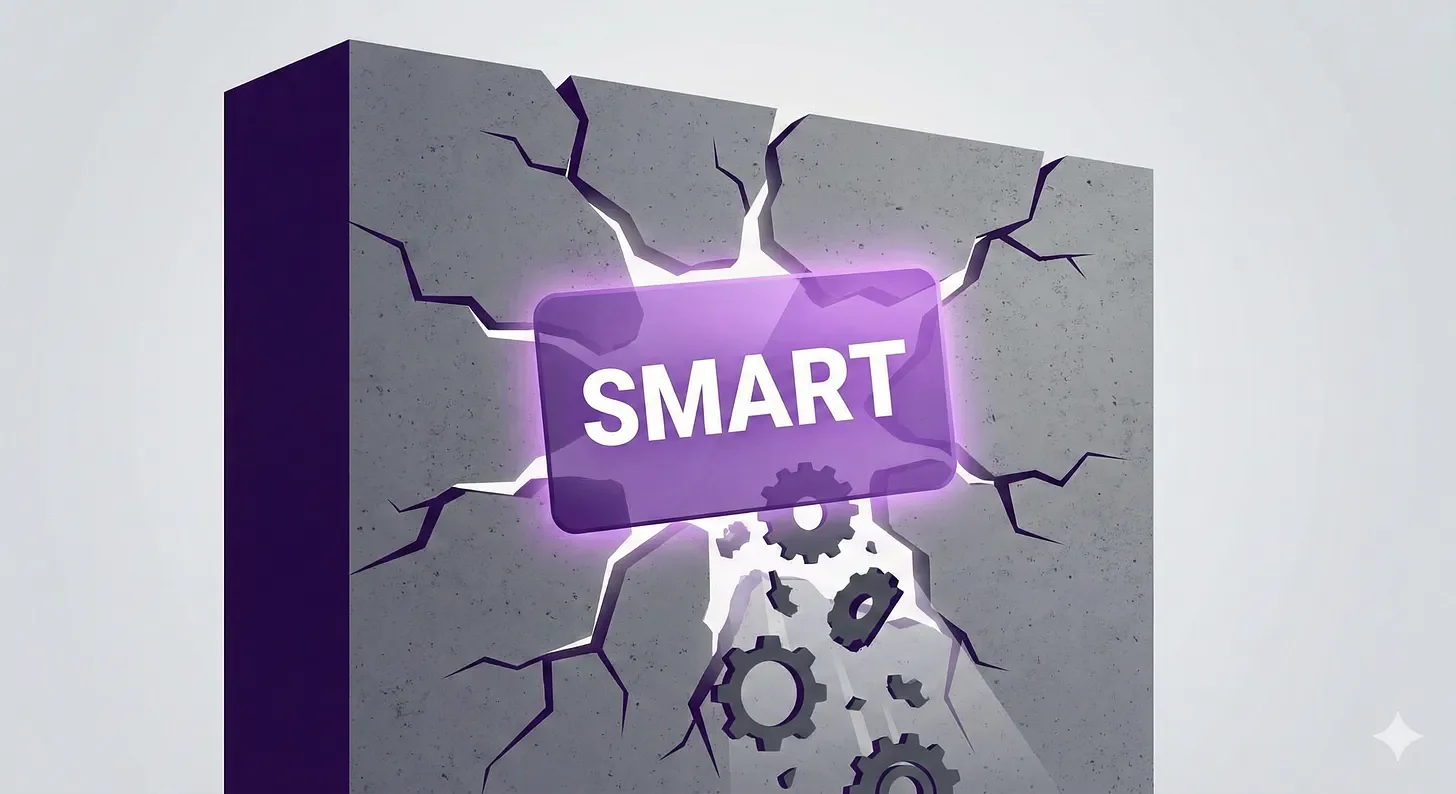
"Smart" is a conversation-ender disguised as a compliment. Here is how to replace it with actual strategy.
It’s 4pm on a Friday. The leadership team is gathered around a conference table littered with cold coffee and half-eaten takeout. The head of strategy just walked them through three possible paths forward. Different resource allocations, different theories of change, different risks…
Nine months later, the initial problem is worse. In the debrief, someone says, “We made smart choices with the information we had.” And everyone nods again.

Plot twist: Telling someone to ‘think strategically’ is like trying to teach them to swim by describing water.
A strategic operating system runs on strategic operators—people who default to context, tradeoffs, and second-order effects. People who ask “why” before “how.”
Last week we named the need to get your hiring process set-up so that you can identify and hire the people who do this. Today we’re talking about what to do with the people you’ve already hired who don’t.
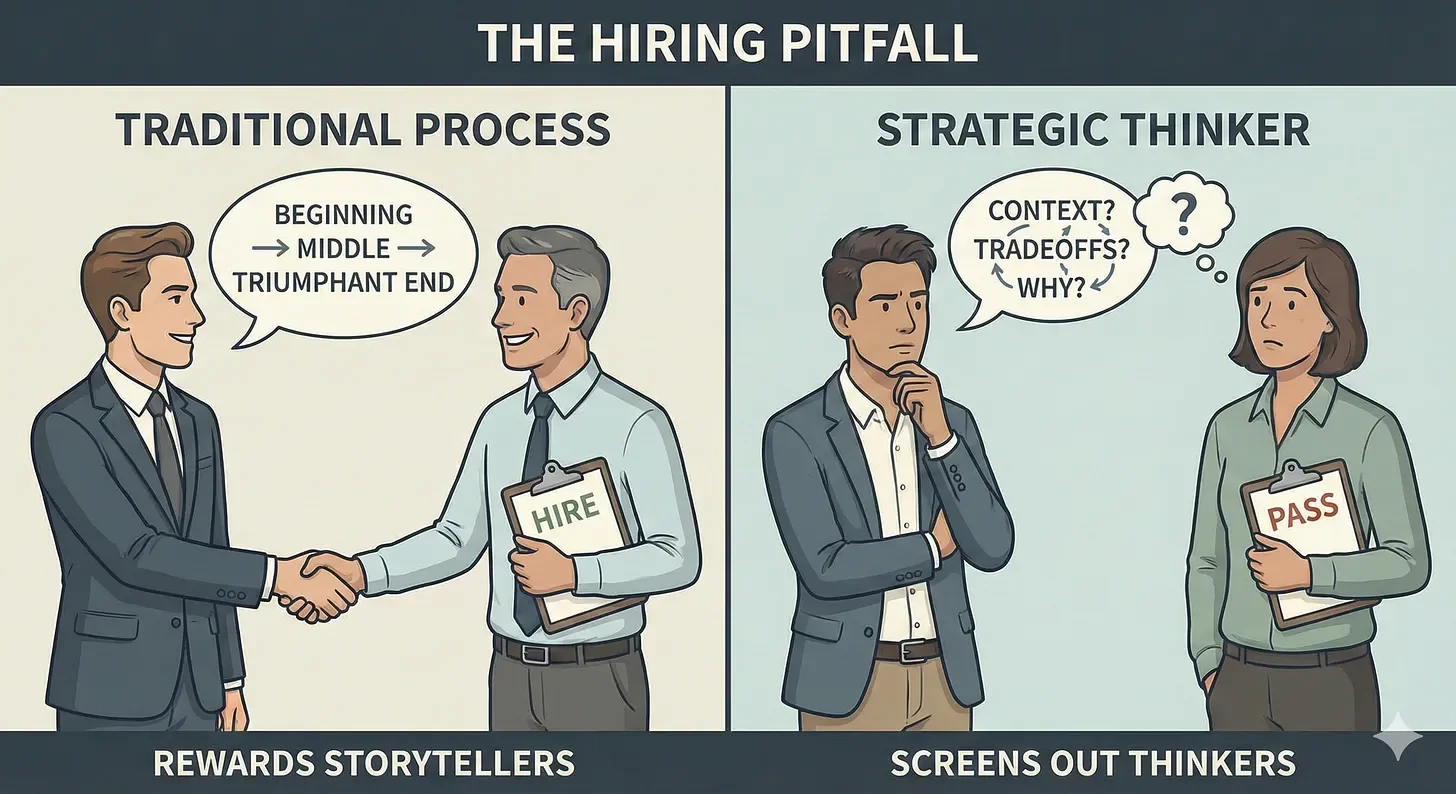
Oh noooo....is your hiring process actually filtering out strategic thinkers?
To start: operating systems aren’t just processes, they’re people.
A strategic operating system runs on strategic operators—people who default to thinking about context, tradeoffs, and second-order effects. People who naturally ask “why” before “how.”
Strategic thinking is more innate in some than others. It’s also trainable, but not quick.
I’ll save the science for a different article, but short story: strategic thinking involves complex brain networks and depends on the ability to engage both logical (left-brain) and intuitive (right-brain) processes to see patterns, anticipate outcomes, and plan for the future. Again, trainable, but the work of rewiring brains is not so quick.
"Smart" is a conversation-ender disguised as a compliment. Here is how to replace it with actual strategy.
It’s 4pm on a Friday. The leadership team is gathered around a conference table littered with cold coffee and half-eaten takeout. The head of strategy just walked them through three possible paths forward. Different resource allocations, different theories of change, different risks…
Nine months later, the initial problem is worse. In the debrief, someone says, “We made smart choices with the information we had.” And everyone nods again.

Making Better Decisions Under Uncertainty
Here’s the uncomfortable truth: certainty isn’t coming. Not because you’re missing something. Because it doesn’t exist.
Every meaningful decision you make as a leader happens under conditions of uncertainty. The 80/20 principle applies: you’re almost never going to have more than about 80% of the information you want. You can commission another report, schedule another meeting, wait another quarter—and you’ll still be at 80%. The certainty trap is spending your energy chasing that final 20% that may not even exist.

The Difference Between Wins That Build and Wins That Deplete
Strategic operators understand something that reactive leaders don’t.
Not all wins are equal.
Some wins create capacity. They build infrastructure, develop people, establish systems, strengthen relationships, or generate resources that compound over time. These wins make the next win easier. They create momentum.

Welcome to the Strategic Agility Reboot
How we got here
Leadership is hard. And powerful, rewarding, and at times, exhilarating. It isn’t just what you do — it’s somehow, fundamentally, who you are.
Leaders move with intention. We do good work and feel good doing it, stabilized by strategy. We set others up to do the same. New information doesn’t derail us — it energizes us. We absorb, recalibrate, and move forward with sharper clarity. The unknown and difficult questions excite us. We trust our processes, our systems, our people, and ourselves.
Momentum builds. Strategic thinking, decisions, and actions compound, scale, and adapt. Our team operates with laser focus and we lead with grounded power toward progress and impact.
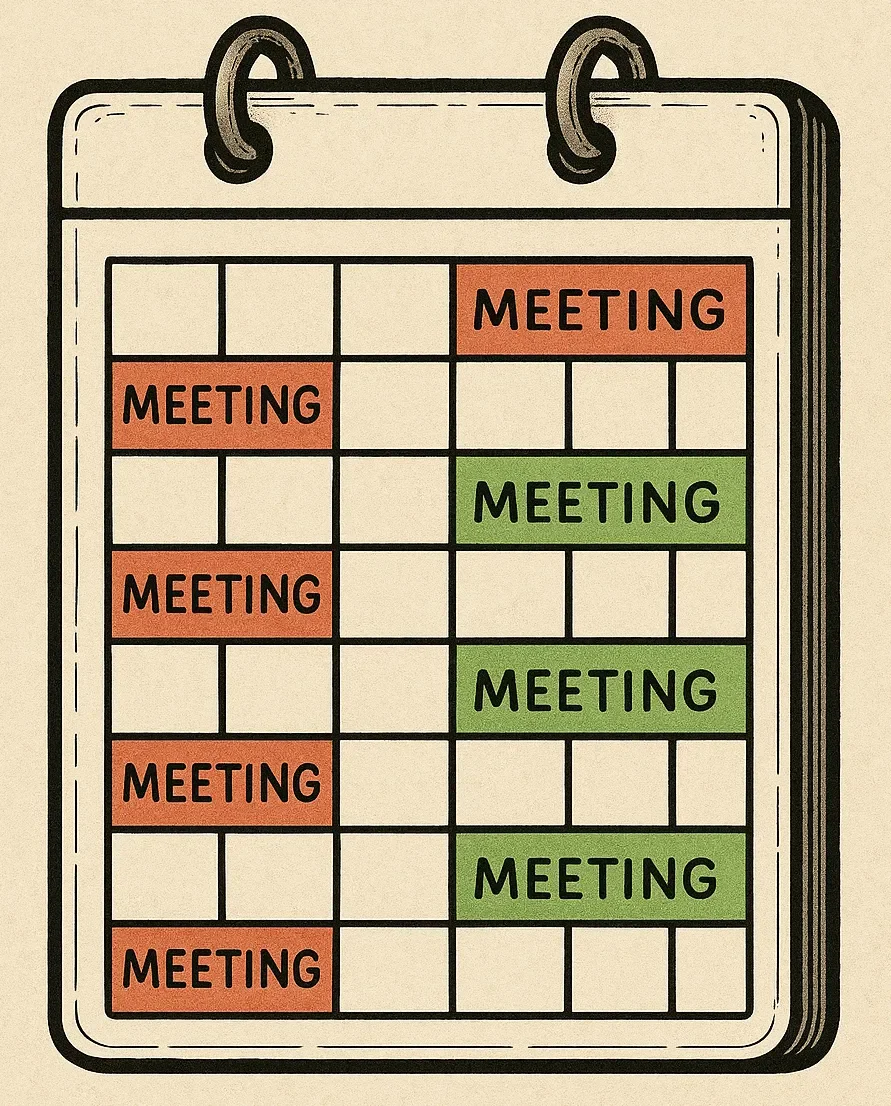
Why That Meeting Probably Doesn't Need to Exist…
This was my day last week on Thursday, and it sent me down a rabbit hole I’ve been in before, one that I think most of us fall into more often than we admit. We’re doing things. We’re busy. Our calendars are full. But somewhere along the way, we lost the thread connecting what we do to what we’re trying to achieve.
In the first two installments of this series, we talked about the Pause Protocol and self-evaluation. Those tools help you create space and identify patterns. What we want to talk about today is what happens in that space, what you do with those patterns once you see them.

Strategic Reboot #2: You can't strengthen a muscle you haven't located
In this second installment of our Strategic Agility Reboot series, we explore how self-evaluation serves as a foundational tool for strategic operators. Building on our introduction to the Pause Protocol, we now turn to a practical framework that helps you identify your strategic leverage points with clarity and purpose.
Take the Strategic Operator Self-Evaluation now to pinpoint exactly where your efforts will yield the greatest impact, transforming anxiety about performance into actionable insights that will elevate your strategic leadership and consulting practice.
Thanks for reading! Subscribe for free to receive new posts and support our work.
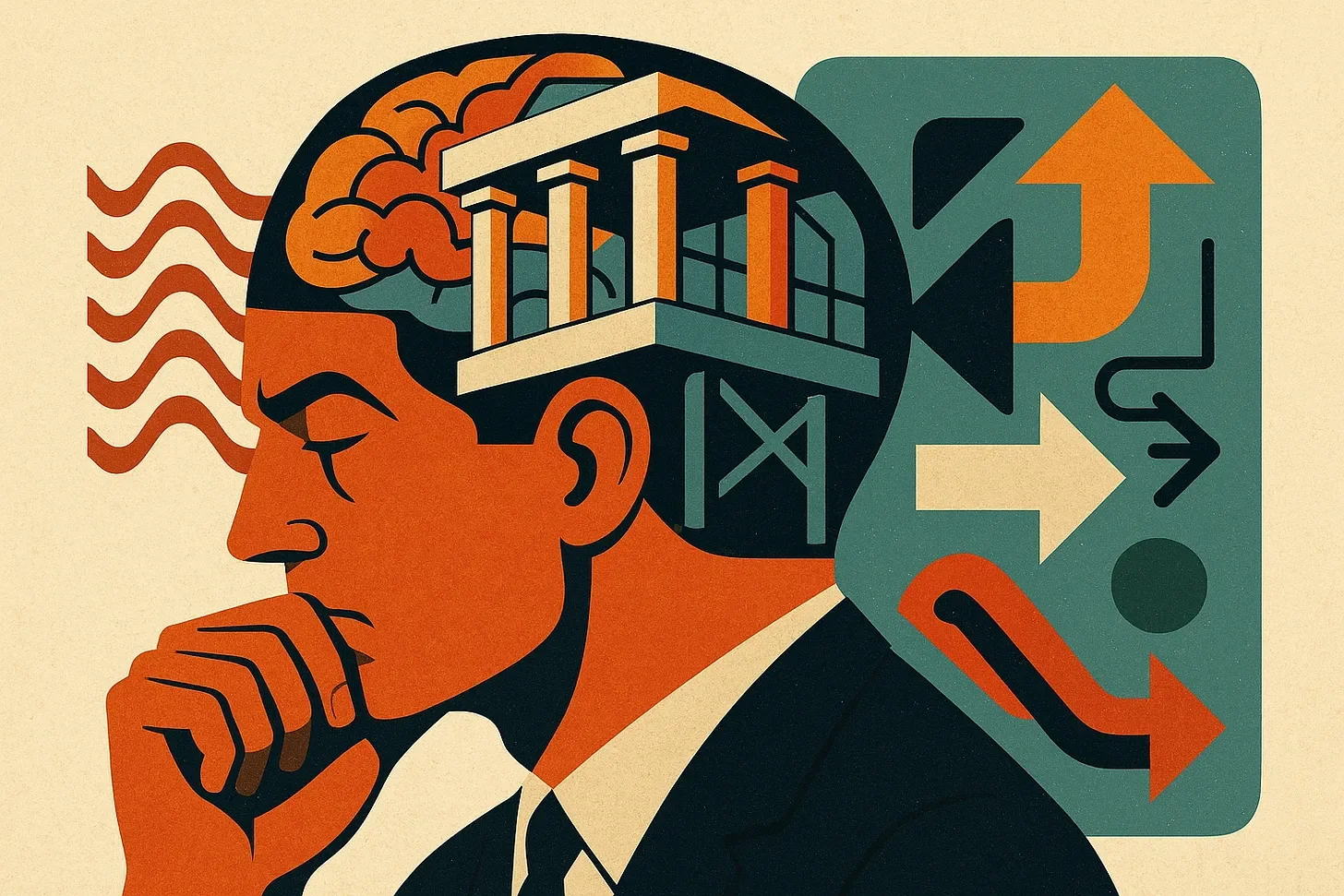
Why smart people keep making decisions they regret later
This article breaks down that cognitive infrastructure into two toolkits: the Anticipation Toolkit for seeing what’s coming before it arrives, and the Navigation Toolkit for steering through uncertainty without losing your strategic thread. These are specific, learnable skills that change how you process complexity, map implications, and navigate uncertainty in real time. And what’s really cool is we’ll do it through scenarios